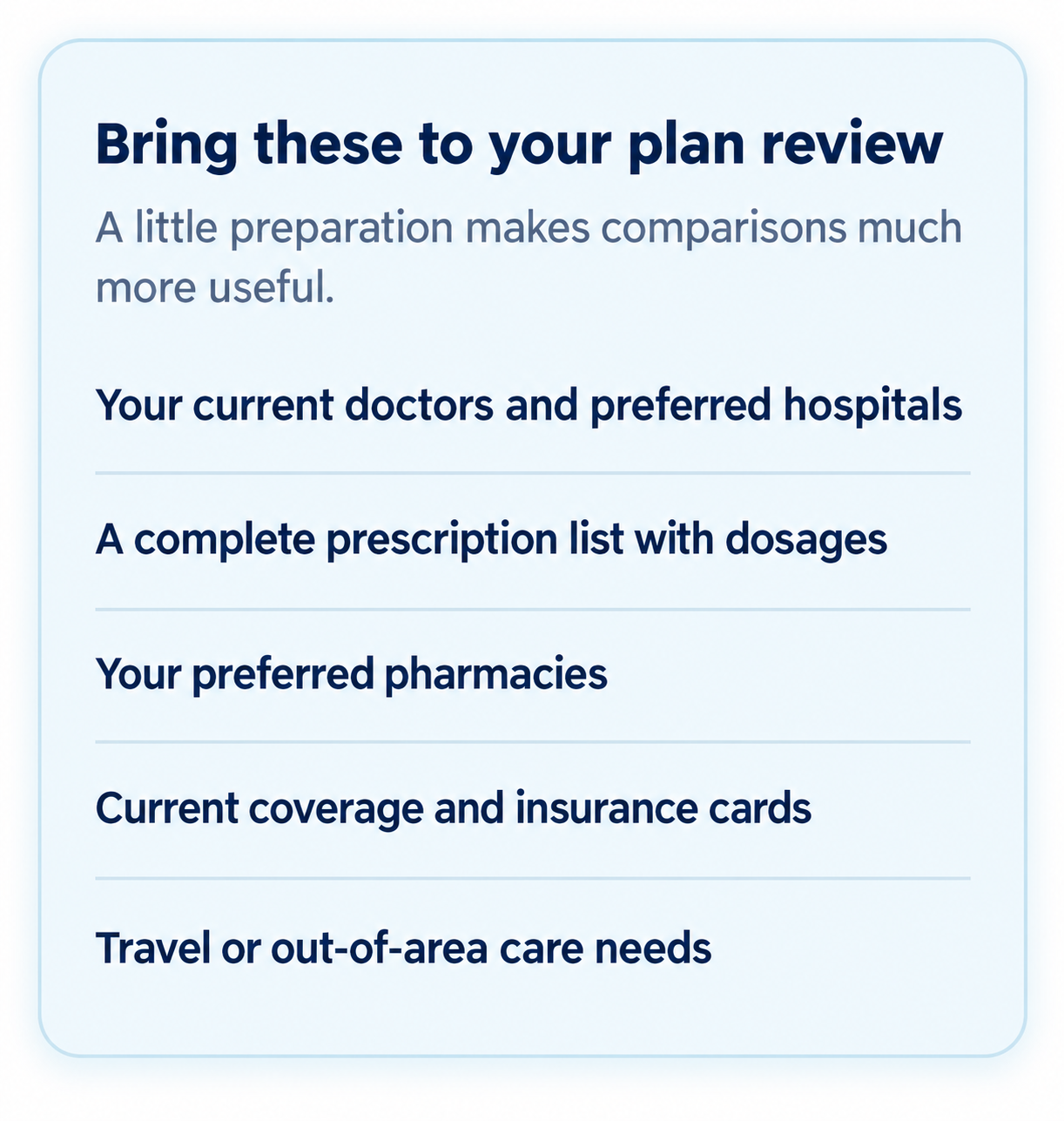
Doctors and hospitals
Confirm that the providers and facilities you use are in-network and accepting the plan.
A Medicare Advantage Plan is a Medicare health plan offered by a private insurance company that contracts with Medicare to provide your Medicare Part A (hospital insurance) and Part B (medical insurance) benefits. These plans are also known as Medicare Part C and provide an alternative way to receive your Medicare coverage.
Medicare Advantage plans may include different types of plan options, including Health Maintenance Organizations (HMOs), Preferred Provider Organizations (PPOs), Private Fee-for-Service (PFFS) plans, Special Needs Plans (SNPs), and Medicare Medical Savings Account (MSA) plans. Each type of plan can have different rules regarding providers, costs, referrals, and how you receive covered services.
When you enroll in a Medicare Advantage Plan, your Medicare-covered Part A and Part B services are generally provided through and paid for by the Medicare Advantage plan rather than Original Medicare. You will continue to have Medicare, but your coverage and benefits will be administered through the private insurance company offering your plan.
Many Medicare Advantage plans also include prescription drug coverage (Part D), which can help cover the cost of covered prescription medications. Depending on the plan, additional benefits may also be available.
Because plans, costs, benefits, provider networks, and coverage rules can vary, it is important to review your options carefully and choose a plan that fits your individual needs and circumstances. A licensed insurance agent can help you understand the available Medicare Advantage options and the differences between plans.